

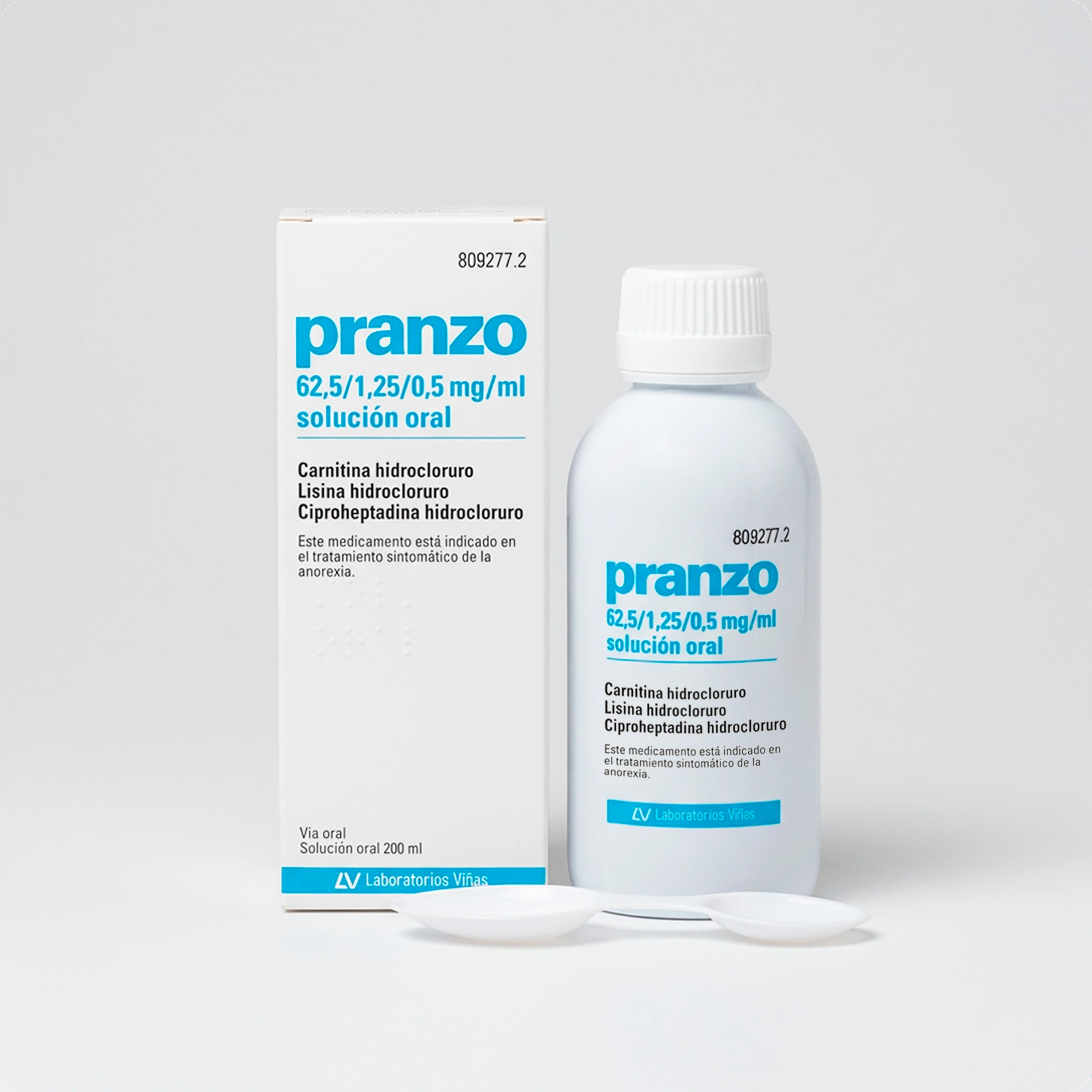
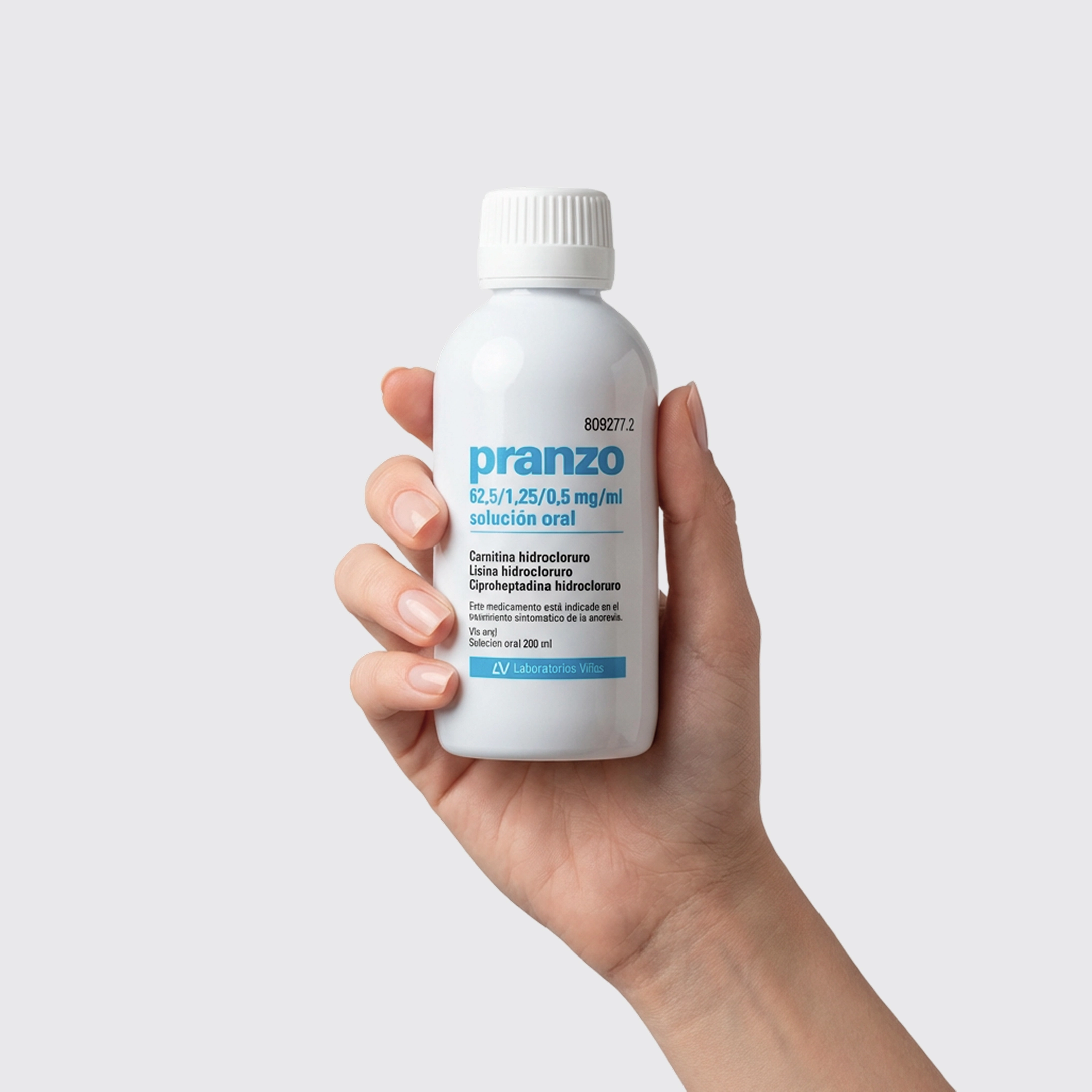
Pranzo Oral Solution 62.5/1.25/0.5 mg/ml
Appetite-stimulating medicine indicated for the symptomatic treatment of anorexia in adults and paediatric patients over 2 years of age.
The active ingredients are carnitine hydrochloride, lysine hydrochloride and cyproheptadine hydrochloride. Each ml of oral solution contains 62.50 mg of carnitine hydrochloride, 1.25 mg of lysine hydrochloride and 0.50 mg of cyproheptadine hydrochloride. The other components (excipients) are: sucrose, 96 per cent ethanol, sodium saccharin, raspberry flavouring 5304-A, disodium edetate, potassium sorbate (E-202), propyl parahydroxybenzoate sodium salt (E-217), amaranth (E-123) and purified water.
Follow exactly the administration instructions for the medicine contained in the package leaflet or those indicated by your doctor or pharmacist. If in doubt, ask your doctor or pharmacist. This medicine is taken using the double-dose spoon (2 ml and 4 ml). Take this medicine before meals.
Use in adults: The recommended daily dose is 1 large spoonful (4 ml) for every 10 kg of body weight. The total should be divided into 3 or 4 doses a day. Do not exceed 5 spoonfuls (4 ml) per day (20 ml).
Use in children: The recommended daily dose is 1 small spoonful (2 ml) for every 4 kg of body weight. If symptoms worsen or persist after 30 days, you should consult a doctor.
Pranzo is a pink oral solution. It is presented in opaque white plastic bottles, with a screw cap and seal, together with a double dosing spoon (2 ml and 4 ml). The pack contains 200 ml of oral solution.


*AI-generated images reviewed by the Laboratorios Viñas team.